
Most modern examples of ‘generational wealth’ are tame.
Over 1400 years ago, Uthman ibn Affan RA gave a well and some date farms as an endowment (waqf) which is still generating millions of riyals for the poor today!
Now, that’s real generational wealth.
What is a waqf?
A Waqf is an Islamic endowment, where an asset or cash is donated, with the income generated used to sustainably fund charitable causes.
The term Waqf is derived from the Arabic root word waqafa, which means to detain or to hold.
Typically, the asset donated is income-generating (i.e. land), or if it’s cash, it is invested to generate a return. The profits earned from the donation will be used to sustainably support the cause you care about.
The noble Prophet Muhammad ﷺ was an advocate for the use of waqf and encouraged his companions to establish a Waqf.
When `Umar RA got a piece of land in Khaibar, he came to the Prophet ﷺ saying, “I have got a piece of land, better than which I have never got. So what do you advise me regarding it?”
The Prophetﷺ said, “If you wish, you can keep it as an endowment to be used for charitable purposes.”
So, `Umar gave the land in charity (i.e. as an endowment on the condition that the land would neither be sold nor given as a present, nor bequeathed, (and its yield) would be used for the poor, the kinsmen, the emancipation of slaves, Jihad, and for guests and travellers; and its administrator could eat in a reasonable just manner, and he also could feed his friends without intending to be wealthy by its means.” (Sahih al-Bukhari 2772)
The legacy that has lasted over 1400 years
During the Prophet ﷺ’s time, a severe drought caused wells to dry up, forcing the Muslim community to pay high fees to access water from the well of Rumah, owned by a non-Muslim.
Seeing the burden on his people, the Prophet ﷺ promised a reward in Jannah for anyone who could buy the well for the community.
“Who will buy the well of Rumah and dip his bucket in it alongside the buckets of the Muslims, in return for a better one in Paradise?”
Uthman ibn Affan RA stepped forward and purchased the well, making it a waqf for the Muslims. Today, this waqf still exists as the oldest surviving one, with its legacy growing to include a hotel in Madinah and a bank account in Uthman RA’s name.
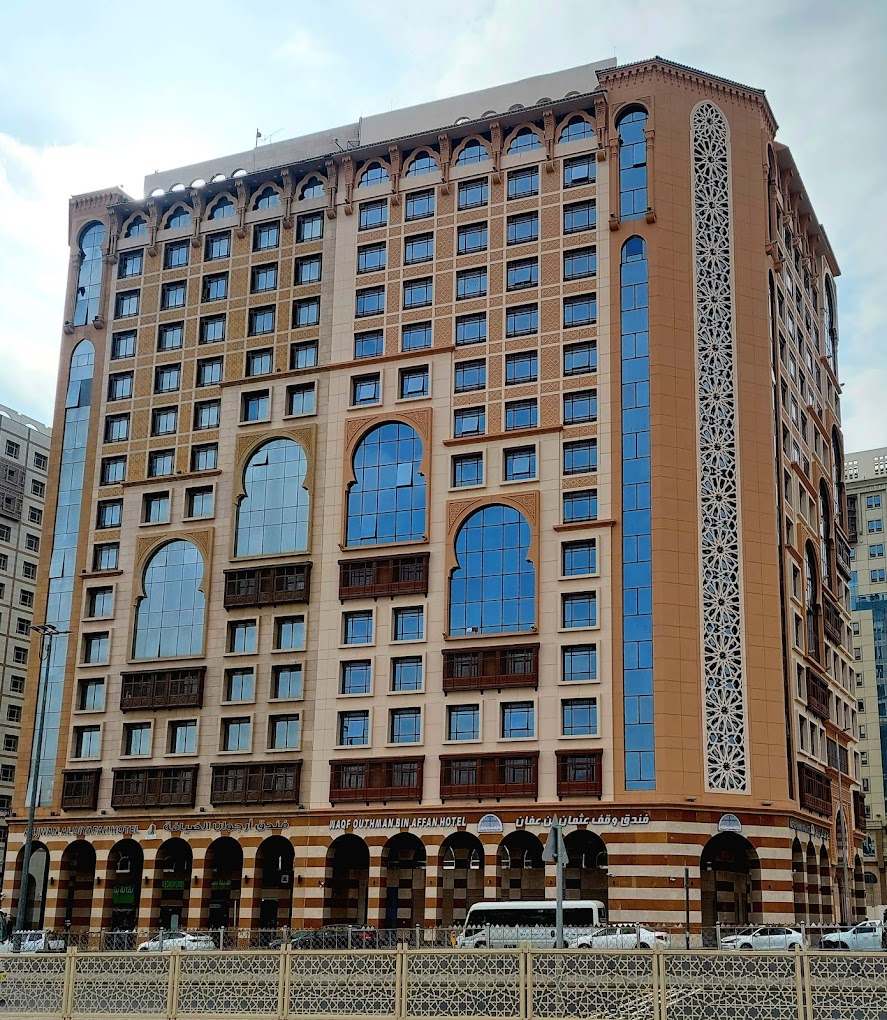
Image: The Waqf Uthman Bin Affan Hotel in Madinah
Half of the money in the account is donated to charity, whilst the other half is reinvested. It has been reported that the money paid out is over 50 million Saudi Riyals each month, equivalent to 13.3 million dollars. This is a prime example of a Waqf and how it can create true generational wealth.
Building our own legacies through waqf
In today’s world, social media often glorifies extreme wealth, especially among celebrities and athletes, making generational wealth a trendy topic. However, it’s crucial not to be swayed by this.
The Prophet ﷺ reminded us that what truly remains after we die is not the wealth we accumulate, but the continuous charity we leave behind.
“When a person dies, all their deeds end except three: sadaqah jariyah (continuous charity), beneficial knowledge, and a righteous child who prays for them.”
To truly secure a lasting legacy and establish real generational wealth, we would do well to invest in awqaf (endowments) that benefit others long after we’re gone.
Subscribe to stay updated for more insights on Islamic finance, personal finance and halal investing.


 Adil Hussain
Leave a reply to Omer Arsalan Khan Cancel reply