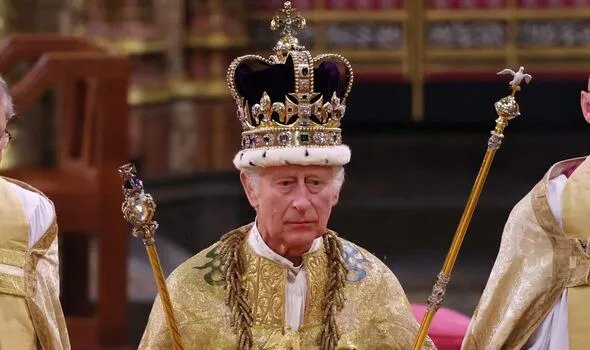
If you don’t want King Charles and Prince Williams to seize your assets to renovate their properties after your death — make sure you leave a will.
Why am I talking about the royals?
Bona Vacantia
When people die without a will or an identifiable next-of-kin, their assets are transferred to the Treasury, which then spends them on public services.
The system is known by the Latin name bona vacantia, meaning “vacant goods”.
However, there is also a medieval-era custom, where the Duchy of Lancaster and Duchy of Cornwall (estates of the royal family) collect bona vacantia from people who die in historic Lancaster and Cornwall.
They’ve collected more than £60m of bona vacantia in the last 10 years! The duchies have both claimed to donate bona vacantia revenues to charities (after costs).
However, a recent investigation by The Guardian has found that only a small percentage of these revenues is being given to charity (15%) and the money is instead being used to to refurbish the royal’s profitable property portfolio!
The duchies are already huge retail empires with farmland, hotels, castles, offices, and luxury real estate in London that have generated ~ £1.2bn in profits over the last 60 years.
Moreover, with taxpayers paying the royals an annual stipend, you’d think they’d have enough money to service their own properties rather than seizing money from the dead.
The government should step in and reform this archaic custom. In the meantime, this story serves as a strong reminder of the importance of having a will. This is especially true for Muslims.
Why Muslims Need a Will
King Charles and bona vacantia aside, Muslims have a religious duty to ensure they have a will.
The Prophet Muhammad ﷺ instructed every Muslim with eligible Muslim to have a will.
“It is the duty of a Muslim who has anything to bequeath not to let two nights pass without writing a will about it.” (Bukhari)
The rules of inheritance in Islam have been explicitly codified in the Quran helping Muslims to avoid the ugly inheritance disputes that can sometimes arise.
Muslims don’t need to fight over who gets what as this has already been divinely ordained. Our job is to do our part and get a legally binding will that is stored in an accessible place.
How Do You Want To Be Remembered?
Preparing your will gives you a great opportunity to think about what legacy you’re going to leave behind and how you want to be remembered.
The esteemed Sheikh Sajid Umar wrote an article on Islamic wills, where he encouraged Muslims to leave messages in their wills for their loved ones.
I’ll end this piece with a recommendation from the Sheikh on what to include:
“Recommend to those whom you left among your family and all your relatives to fear Allah, to reconcile relations, to obey Allah SWT and His Messenger ﷺ, to exhort one another to the truth, and to be patient with it.”
 Adil Hussain
Leave a comment